
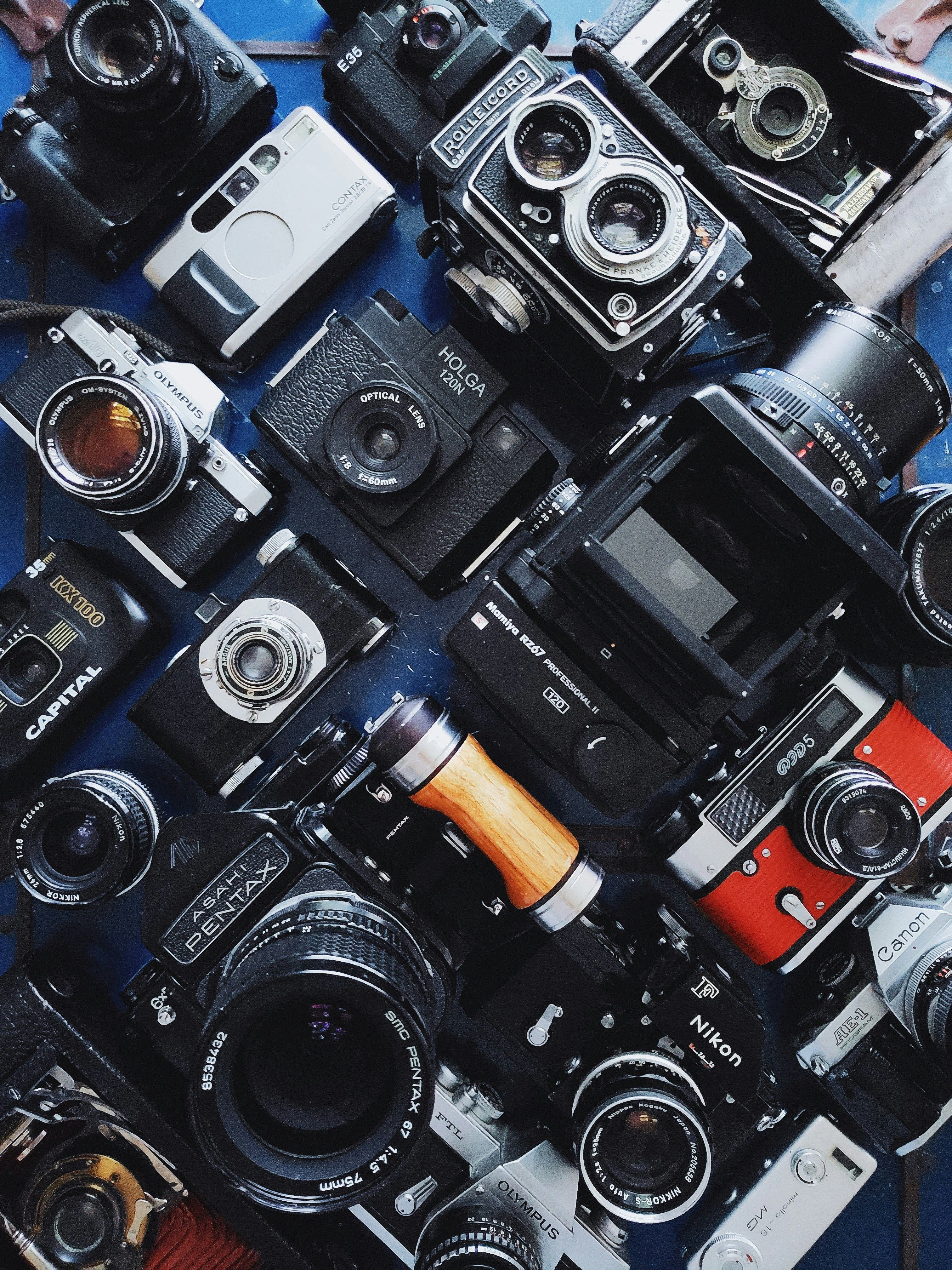
Choosing a 35mm film is less about finding one “best” film and more about matching the film to your light, subject and preferred look. This guide covers every colour and black-and-white 35mm film currently sold by Pixels Plus, from affordable everyday films to professional portrait stocks.
The technical details below come from Kodak, Fujifilm, ILFORD and Lucky Film documentation. Descriptions of a film’s look are a practical starting point, not a guarantee: exposure, lighting, lens, development, scanning and colour correction all influence the finished image.
Need a quick recommendation? Choose ISO 200 for bright daylight, ISO 400 for the most flexible everyday use, and ISO 800 when available light is limited. For black and white, choose HP5 Plus or TRI-X 400 for versatility, FP4 Plus for fine detail in good light, or XP2 Super when you want convenient C-41 processing.
35mm film comparison at a glance
Colour negative film
C-41
Character: Very fine grain; natural skin tones.
Best for: Portraits, fashion, studio and commercial work.
C-41
Character: Fine grain; natural skin tones; versatile colour.
Best for: Portraits, weddings, travel and changing light.
C-41
Character: High speed; natural skin tones; strong latitude.
Best for: Indoor events, available light and evenings.
C-41
Character: Vivid colour, fine grain and sharp detail.
Best for: Everyday use, action, travel and mixed conditions.
C-41
Character: Straightforward, medium-speed colour film.
Best for: Sunny snapshots, holidays and learning film.
C-41
Character: Vibrant colour, fine grain and broad latitude.
Best for: Family photos, travel and bright outdoor scenes.
C-41
Character: Vivid colour, natural skin tones and fine grain.
Best for: Daylight, portraits, holidays and everyday use.
C-41
Character: Faithful colour, fine grain and wide latitude.
Best for: All-round use, action, cloud and lower light.
Black-and-white film
Traditional B&W
Character: Classic grain, crisp detail and wide latitude.
Best for: Street, documentary, portraits and low light.
Traditional B&W
Character: Flexible, medium contrast; pushes well.
Best for: Action, available light and documentary work.
Traditional B&W
Character: Very fine grain, medium contrast and high sharpness.
Best for: Landscapes, architecture, portraits and large prints.
C-41
Character: Fine grain, wide latitude and C-41 convenience.
Best for: Travel, mixed light, scanning and easy processing.
Traditional B&W
Character: Affordable, traditional black-and-white film.
Best for: Street, documentary, experimenting and learning.
Colour 35mm films
Kodak Portra 160 — refined colour and the finest Portra grain
Characteristics: Kodak describes Portra 160 as having a significantly finer grain structure for improved scanning and enlargement, together with exceptionally smooth and natural skin-tone reproduction. Its ISO 160 speed is most comfortable when there is plenty of light or when you can use a flash or tripod.
Best for: portraits, fashion, studio work, commercial photography and carefully lit outdoor sessions. Pick Portra 160 when fine detail and restrained, natural-looking skin colour matter more than speed.
Kodak Portra 160 specifications and official sample photographs
Kodak Portra 400 — the versatile professional all-rounder
Characteristics: Portra 400 combines true ISO 400 speed with very fine grain for a high-speed colour negative film. Kodak highlights its smooth, natural reproduction across a wide range of skin tones and its ability to work across varied lighting conditions.
Best for: portraits, weddings, fashion, nature, travel and outdoor photography. Choose it when you want premium results but need more flexibility than an ISO 160 film provides.
Kodak Portra 400 specifications and official sample photographs
-000445020003.jpg)
Kodak Portra 800 — natural colour when the light falls
Characteristics: Portra 800 provides the speed of an ISO 800 film while retaining relatively fine grain, high sharpness, natural skin tones and balanced colour. Kodak specifically notes its strong underexposure latitude and says it can be pushed to EI 1600 when extra speed is needed.
Best for: indoor events, concerts, evening portraits, low-light street photography and fast-moving moments in available light. It is the Portra to choose when getting the shot matters more than achieving the finest possible grain.
Kodak Portra 800 specifications and official sample photographs
Kodak UltraMax 400 — vivid, flexible everyday colour
Characteristics: UltraMax 400 is a high-speed, daylight-balanced colour negative film with vivid colour saturation, fine grain, sharp detail and consistent colour reproduction. Its ISO 400 speed helps in lower light, extends flash range and allows faster shutter speeds to reduce camera shake or freeze action.
Best for: everyday photography, holidays, pets, children, action and mixed outdoor conditions. It is a practical choice when you want stronger colour and do not know exactly what the day’s light will bring.
Kodak UltraMax 400 product information · real UltraMax 400 examples on Wikimedia Commons
Kodak ColorPlus 200 — simple, affordable daylight film
Characteristics: ColorPlus 200 is an ISO 200 colour negative film for standard C-41 processing. Its medium speed makes it easiest to use outdoors or in bright, even light. Compared with the professional Portra range, it is a simpler and more economical film for casual photography.
Best for: sunny-day snapshots, holidays, family photos and learning how exposure works without spending Portra money on every roll.
Kodak ColorPlus 200 product information · real ColorPlus examples on Wikimedia Commons
Kodak Gold 200 — vibrant colour with forgiving exposure latitude
Characteristics: Kodak Gold 200 is a medium-speed, daylight-balanced film with fine grain, vibrant colour saturation and sharp detail. Kodak rates it as tolerant of up to two stops of underexposure and three stops of overexposure, making it unusually forgiving for an ISO 200 consumer film.
Best for: travel, family photographs, landscapes, sunny street photography and colourful outdoor scenes. Choose Gold when you have good light and want energetic colour without moving to a professional film.
Kodak Gold 200 product information

Fujifilm 200 — fine grain and lively colour in good light
Characteristics: Fujifilm describes its ISO 200 colour negative film as offering vivid colour across reds, blues and yellows, excellent sharpness, natural skin-tone reproduction and fine grain for a medium-speed film. It is daylight-balanced and uses standard C-41 processing.
Best for: bright daylight, portraits, group photos, travel and colourful everyday scenes. It is a strong choice when you want an easy ISO 200 film with clean detail and lively colour.
Fujifilm 200 official product information and data sheet
Fujifilm 400 — the flexible Fujifilm all-rounder
Characteristics: Fujifilm 400 combines high speed and wide exposure latitude with fine grain, sharpness and smooth, faithful colour reproduction. Its ISO 400 sensitivity provides more flexibility than Fujifilm 200 in cloudy weather, shade, indoor light and faster-moving situations.
Best for: family holidays, city photography, pets, action, cloudy days and general use when the lighting may change. Choose it over Fujifilm 200 when you value flexibility more than the finer-grained advantage of a slower film.
Fujifilm 400 official product information
Black-and-white 35mm films
Kodak TRI-X 400 — classic grain for street and documentary work
Characteristics: TRI-X 400 is a high-speed panchromatic black-and-white negative film with a distinctive classic grain structure, strong edge sharpness, high resolving power and wide exposure latitude. Kodak recommends it for push processing when greater effective speed is required.
Best for: street photography, documentary work, environmental portraits, fast action and low-light scenes. Choose TRI-X when visible grain and crisp tonal separation are part of the photograph’s character.
Kodak TRI-X 400 official product information · real TRI-X examples on Wikimedia Commons
ILFORD HP5 Plus — flexible traditional black and white
Characteristics: HP5 Plus is an ISO 400 traditional black-and-white film suited to action, available light and general photography. It has a broad working range and, with extended development in an appropriate developer, ILFORD says it can produce high-quality prints at exposure indexes up to EI 3200.
Best for: street, documentary, travel, sport, indoor available-light photography and photographers learning to develop black-and-white film. Choose it when you want one reliable stock that can cover daylight and more demanding light.
ILFORD HP5 Plus official technical data sheet · real HP5 Plus examples on Wikimedia Commons
ILFORD FP4 Plus — fine grain and outstanding sharpness
Characteristics: FP4 Plus is a medium-speed ISO 125 film with very fine grain, medium contrast, outstanding sharpness and robust exposure tolerance. Its slower speed rewards good light and careful exposure with high detail and smooth tonal information.
Best for: landscapes, architecture, portraits, fashion, products and any subject intended for a large print. Pick FP4 Plus when detail and refinement matter more than hand-held low-light speed.
ILFORD FP4 Plus official product information · real FP4 Plus examples on Wikimedia Commons
ILFORD XP2 Super — black and white with C-41 convenience
Characteristics: XP2 Super is different from the other black-and-white films in this guide. It forms a dye-based monochrome negative and is processed in the same C-41 chemistry used for colour negative film. ILFORD describes it as sharp and fine-grained with very wide exposure latitude. It can be exposed from EI 50 to 800 on the same roll and given standard C-41 processing, although ILFORD says EI 400 gives the best balance of sharpness and grain.
Best for: travel, unpredictable or high-contrast light, convenient lab processing and high-quality scanning. Choose XP2 when you want a monochrome result without requiring a traditional black-and-white processing run.
ILFORD XP2 Super official technical data sheet · real XP2 Super examples on Wikimedia Commons
Luckyfilm SHD400 — an affordable traditional B&W option
Characteristics: Lucky Film lists SHD400 as a 400-speed black-and-white film for 35mm and 120 cameras, with good exposure latitude and clear detail. Unlike ILFORD XP2 Super, the current SHD400 is a conventional black-and-white negative film and is compatible with standard black-and-white processing chemicals.
Best for: street and documentary photography, everyday shooting, experimenting with development and photographers who want an economical way to practise black and white. It is a characterful alternative rather than a direct substitute for the predictability of HP5 Plus or TRI-X.
Lucky Film official product range · SHD400 specifications and credited sample photographs at Analogue Wonderland
How to choose between similar films
Portra 160 vs 400 vs 800
- Portra 160: choose it for the finest grain, controlled light and carefully planned portraits.
- Portra 400: choose it as the most versatile premium colour film for people, travel and changing conditions.
- Portra 800: choose it for indoor, evening and low-light work where shutter speed is critical.
Kodak Gold 200 vs ColorPlus 200 vs Fujifilm 200
- Gold 200: Kodak’s vibrant, sharp and especially forgiving ISO 200 option.
- ColorPlus 200: the straightforward budget choice for casual daylight photography.
- Fujifilm 200: a crisp, fine-grained option with lively colour and natural skin tones.
TRI-X 400 vs HP5 Plus vs Lucky SHD400
- TRI-X 400: choose it for its classic grain, edge sharpness and documentary character.
- HP5 Plus: choose it for broad everyday flexibility and well-documented push-processing options.
- Lucky SHD400: choose it as an affordable stock for experimentation and learning.
A note about sample images
Sample photographs are useful, but they are not a controlled scientific comparison. Exposure, scene lighting, developer, scanner and editing can change colour, contrast and grain considerably. The two photographs reproduced above are genuine film images with licences permitting reuse and full attribution. The linked manufacturer galleries and Wikimedia Commons categories provide many more real examples without Pixels Plus copying unlicensed work.
Developing and scanning your film in Sydney
All of the colour films in this guide, plus ILFORD XP2 Super, use C-41 processing. TRI-X 400, HP5 Plus, FP4 Plus and Luckyfilm SHD400 require traditional black-and-white processing. Always tell the lab which film you have, especially when dropping off XP2 Super.
Pixels Plus professionally processes, scans and prints colour and black-and-white film in Crows Nest. Good processing and careful scanning help preserve highlight and shadow detail, manage dust and produce consistent files without erasing the film’s natural character.
View Pixels Plus film developing services or shop our current 35mm film range online.
Final recommendation
If you are still unsure, start with an ISO 400 film: Kodak UltraMax 400 or Fujifilm 400 for colour, and ILFORD HP5 Plus for traditional black and white. Once you know whether you want finer grain, stronger colour, more speed or a particular tonal character, use the comparisons above to choose your next roll.
Visit Pixels Plus at 45 Willoughby Road, Crows Nest, or contact our team for help matching a film to your camera, lighting and subject.